Personal Info
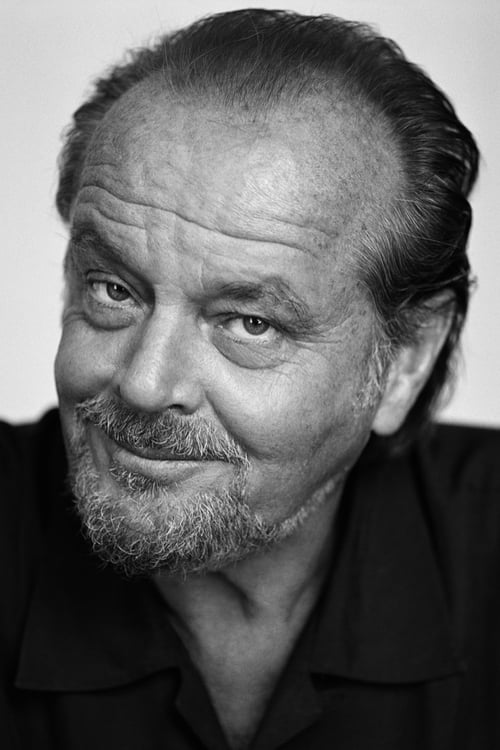
Jack Nicholson
Biography
Early Life and Origins
Jack Nicholson grew up for the first 37 years of his life unaware of a great secret about his true family. His mother, June Frances Nicholson, was a 17-year-old unmarried showgirl . June's parents (Ethel May and John Joseph Nicholson) decided to cover up their daughter's illegitimate birth by raising Jack as their own child . Thus, Nicholson grew up believing his grandparents were his "mother" and "father," and his real mother June was his "sister." In 1974, researchers preparing a Time magazine cover story about him uncovered this truth and informed Nicholson . By this time, both his mother June (in 1963) and grandmother Ethel May (in 1970) had already passed away. Nicholson commented on the news: "It was a pretty dramatic event, but it wasn't what I'd call traumatizing... I was pretty well psychologically formed by then." Nicholson's ancestry is quite diverse. His mother had Irish, English, German, and Welsh descent . He has identified as Irish, comparing himself to Eugene O'Neill whom he portrayed in "Reds": "I'm not saying I'm as dark as he was... but I am a writer, I am Irish, I have had problems with my family." Regarding his biological father, there are various claims. Some sources point to Italian-American showman Donald Furcillo, while biographer Patrick McGilligan suggested that June's manager, Latvian-born Eddie King, might be Nicholson's biological father . It has also been noted that June may not have been certain of the father's identity . Nicholson grew up in the coastal town of Manasquan, New Jersey . He attended Manasquan High School, where he was voted "Class Clown" by his classmates . One teacher prophetically told him: "Something will happen to you, son. I don't know what, but something will happen." He was in detention every day for an entire school year . Instead of going to college, at 17, he moved to Los Angeles in 1954 to join his "sister" June . He began working as an office worker in the animation department at MGM Studios, assisting famous animators William Hanna and Joseph Barbera . He was offered an entry-level job as an animator but declined to pursue his dream of acting .Early Acting Career
Nicholson studied acting at the Players Ring Theater and began appearing in small stage roles and television shows . His first professional acting experience came on May 5, 1955, in the series "Tales of Wells Fargo," a date he considered lucky because it was the jersey number of his childhood hero, Joe DiMaggio . In 1958, he made his film debut starring in the low-budget teen drama "The Cry Baby Killer" . The film's producer was the famous king of B-movies, Roger Corman, with whom he would work for many years . He appeared in Corman's "The Little Shop of Horrors" (1960) as masochistic dental patient Wilbur Force . During this period, he also acted in films such as "The Raven" (1963), "The Terror" (1963), and "The St. Valentine's Day Massacre" (1967) . He worked with director Monte Hellman on low-budget westerns; "Ride in the Whirlwind" (1965) and "The Shooting" (1966) gained cult status in France despite little attention in the U.S. . He also guest-starred in two episodes of "The Andy Griffith Show" . During this period, with his acting career not taking off as hoped, Nicholson turned to behind-the-camera work as a writer/director. He wrote the screenplay for the 1967 counterculture film "The Trip" (directed by Corman, starring Peter Fonda and Dennis Hopper) . With Bob Rafelson, he co-wrote the screenplay for "Head" (1968), starring The Monkees, and arranged the film's soundtrack .Breakthrough: Easy Rider and Rise to Fame
1969 was a turning point in Nicholson's career. In Peter Fonda and Dennis Hopper's cult film "Easy Rider," he portrayed alcoholic lawyer George Hanson . The role was originally written for Rip Torn, who left the project after an argument with Hopper . Nicholson's performance earned him his first Oscar nomination (Best Supporting Actor) . The film, made for only $400,000, grossed $40 million, becoming a massive box office success and turning Nicholson into an "overnight number-one hero of the counter-culture movement" . In 1970, he starred in "Five Easy Pieces" as Bobby Dupea, a restless oil rig worker who is actually a classical music prodigy . This performance earned him his second Oscar nomination (Best Actor) . The film's famous diner scene (the chicken salad sandwich scene) became cinema history. Co-star Karen Black noted that Nicholson partially improvised in this scene .The 1970s: Golden Age and First Oscar
The 1970s were a period of masterpieces for Nicholson. In 1973, he starred in Hal Ashby's "The Last Detail" as Billy "Badass" Buddusky, a naval petty officer tasked with escorting a young sailor to prison . This performance won him the Best Actor Award at the 27th Cannes Film Festival and earned his third Oscar nomination . In 1974, he portrayed private detective J.J. "Jake" Gittes in Roman Polanski's masterpiece "Chinatown" . This iconic film noir performance brought him his fourth Oscar nomination (Best Actor) and a Golden Globe Award for Best Actor . 1975 brought one of Nicholson's most iconic roles in Miloš Forman's "One Flew Over the Cuckoo's Nest." As rebellious inmate Randle Patrick McMurphy, who fakes insanity to avoid prison labor, he won the Academy Award for Best Actor, along with Golden Globe and BAFTA awards . The film also won four other Oscars including Best Picture. During the 1970s, he also appeared in Michelangelo Antonioni's "The Passenger" (1975) and Arthur Penn's "The Missouri Breaks" (1976) alongside Marlon Brando . In 1971, he made his directorial debut with "Drive, He Said" .The 1980s: The Shining, Reds, and Second Oscar
In 1980, he portrayed writer Jack Torrance, who slowly descends into madness while caretaking an isolated hotel during winter, in Stanley Kubrick's horror classic "The Shining" . His over-the-top and terrifying performance became one of the most memorable in horror film history. The line "Here's Johnny!" became cultural shorthand . In 1981, he played American communist journalist and playwright Eugene O'Neill in Warren Beatty's "Reds" . This earned him his fifth Oscar nomination (Best Supporting Actor). 1983 brought James L. Brooks's "Terms of Endearment," in which he portrayed retired astronaut Garrett Breedlove . This performance won him the Academy Award for Best Supporting Actor and a Golden Globe . In 1985, he played mafia hitman Charley Partanna in John Huston's "Prizzi's Honor," earning his seventh Oscar nomination . In 1987, he portrayed an alcoholic homeless man during the Great Depression in Hector Babenco's "Ironweed" alongside Meryl Streep, receiving his eighth Oscar nomination . In 1989, he portrayed the unforgettable villain The Joker in Tim Burton's "Batman" . The film was a massive box office success, and Nicholson reportedly earned approximately $60 million from his profit participation deal .The 1990s: A Few Good Men, As Good As It Gets, and Third Oscar
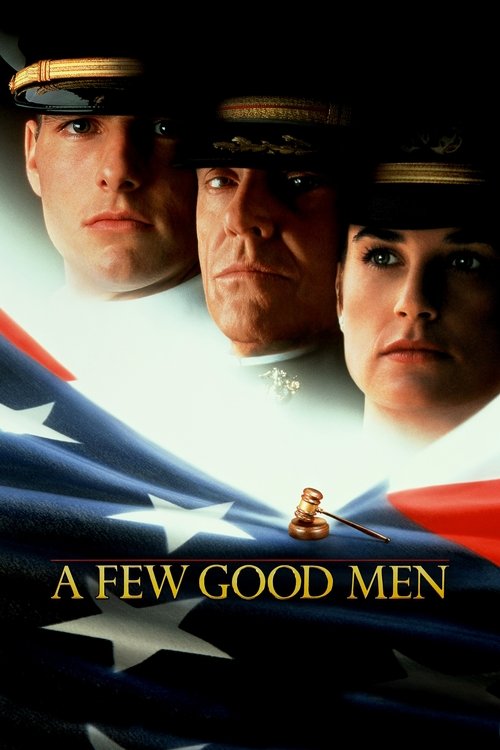
In 1992, he portrayed Colonel Nathan R. Jessep, a rigid Marine Corps officer embodying unquestionable authority, in Rob Reiner's "A Few Good Men" . His courtroom confrontation with Tom Cruise and unforgettable line "You can't handle the truth!" became cinema history. This performance earned his ninth Oscar nomination . In 1996, he played a publisher who transforms into a werewolf in Mike Nichols's "Wolf" . In 1997, he reunited with director James L. Brooks for "As Good as It Gets," portraying obsessive-compulsive writer Melvin Udall . This performance won him his third Academy Award for Best Actor and a Golden Globe . This made him one of only three male actors to win three Oscars (alongside Daniel Day-Lewis and Walter Brennan) .The 2000s: About Schmidt, The Departed, and Later Years
In 2002, he starred in Alexander Payne's "About Schmidt" as Warren Schmidt, a retired insurance actuary questioning his life . His subtle and touching performance earned his eleventh Oscar nomination . In 2003, he starred alongside Diane Keaton in Nancy Meyers's romantic comedy "Something's Gotta Give" . In 2006, he portrayed mob boss Frank Costello in Martin Scorsese's Oscar-winning film "The Departed" . This role brought his twelfth and final Oscar nomination . In 2007, he starred alongside Morgan Freeman in "The Bucket List" as two terminally ill men who embark on a road trip .Retirement and Present Day
His final film role was in 2010's "How Do You Know" . In 2013, at age 76, reports emerged that he was retiring from acting . While no official announcement was made, sources cited memory issues and difficulty remembering lines . Nicholson now lives a quiet life at his home in Los Angeles, rarely appearing in public. He is frequently seen courtside at Los Angeles Lakers basketball games.🏆 Career Milestones
1958: Film debut with "The Cry Baby Killer" . 1969: First Oscar nomination and international breakthrough with "Easy Rider" . 1970: Second Oscar nomination and star status with "Five Easy Pieces" . 1973: Cannes Best Actor Award for "The Last Detail" . 1974: Fourth Oscar nomination and Golden Globe for "Chinatown" . 1975: First Oscar (Best Actor) for "One Flew Over the Cuckoo's Nest" . 1980: Iconic role in horror classic "The Shining" . 1981: Fifth Oscar nomination for "Reds" . 1983: Second Oscar (Best Supporting Actor) for "Terms of Endearment" . 1989: The Joker in "Batman" and $60 million payday . 1992: "You can't handle the truth!" in "A Few Good Men" . 1994: AFI Life Achievement Award . 1997: Third Oscar for "As Good as It Gets" . 1999: Golden Globe Cecil B. DeMille Lifetime Achievement Award . 2002: Eleventh Oscar nomination for "About Schmidt" . 2006: Twelfth Oscar nomination for "The Departed" . 2013: Retirement from acting .🎭 Cinematic Legacy
Jack Nicholson is widely regarded as one of the greatest actors in cinema history . With 12 Oscar nominations, 3 Oscar wins, and countless unforgettable characters, he is a living legend of Hollywood. Throughout his career, he has typically portrayed outsiders, rebels, and marginalized characters: alcoholic lawyer George Hanson (Easy Rider), restless pianist Bobby Dupea (Five Easy Pieces), rebellious inmate Randle McMurphy (Cuckoo's Nest), mad writer Jack Torrance (The Shining), maniacal Joker, authoritarian Colonel Jessep (A Few Good Men), obsessive writer Melvin Udall (As Good as It Gets)... His acting style is energetic, charismatic, and often possesses a dangerous gleam. His use of his eyes and eyebrows, his grin, and his threatening demeanor make him instantly recognizable. Critics have noted that he doesn't so much disappear into roles as he makes the roles his own. His contributions to cinema have been honored with numerous awards: 3 Oscars, 7 Golden Globes, 3 BAFTAs, the AFI Life Achievement Award (1994), the Kennedy Center Honor (2001), and many more . He received an honorary doctorate from Brown University in 2010 . He best summarizes himself: "I'm none of them and all of them. There's a little bit of me, I suppose, in every part I play. As an actor you can't help inserting yourself, especially if you love acting."Trivia
Awards & Achievements28 awards
1970: Best Supporting Actor (Easy Rider) - NOMINATION
1971: Best Actor (Five Easy Pieces) - NOMINATION
1974: Best Actor (The Last Detail) - NOMINATION
1975: Best Actor (Chinatown) - NOMINATION
1976: Best Actor (One Flew Over the Cuckoo's Nest) - WON
1982: Best Supporting Actor (Reds) - NOMINATION
1984: Best Supporting Actor (Terms of Endearment) - WON
1986: Best Actor (Prizzi's Honor) - NOMINATION
1988: Best Actor (Ironweed) - NOMINATION
1993: Best Supporting Actor (A Few Good Men) - NOMINATION
1998: Best Actor (As Good as It Gets) - WON
2003: Best Actor (About Schmidt) - NOMINATION
2007: Best Supporting Actor (The Departed) - NOMINATION
1974: Best Actor - Drama (Chinatown) - WON
1975: Best Actor - Drama (One Flew Over the Cuckoo's Nest) - WON
1983: Best Supporting Actor (Terms of Endearment) - WON
1985: Best Actor - Musical/Comedy (Prizzi's Honor) - WON
1997: Best Actor - Musical/Comedy (As Good as It Gets) - WON
1999: Cecil B. DeMille Lifetime Achievement Award - WON
2002: Best Actor - Drama (About Schmidt) - WON
1974: Best Actor (Chinatown / The Last Detail) - WON
1976: Best Actor (One Flew Over the Cuckoo's Nest) - WON
1982: Best Supporting Actor (Reds) - WON
1973: Best Actor (The Last Detail) - WON
1994: AFI Life Achievement Award
1996: Hollywood Walk of Fame Star
2001: Kennedy Center Honor
2010: Brown University Honorary Doctorate of Fine Arts