Personal Info
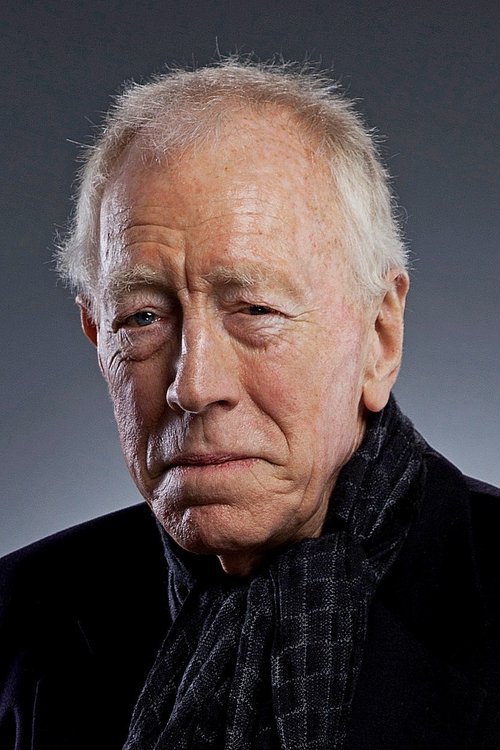
Max von Sydow
Biography
Early Life and Origins
Carl Adolf von Sydow (who would later adopt the name Max) was born on April 10, 1929, in the historic university city of Lund in southern Sweden . His father, Carl Wilhelm von Sydow, was a professor of ethnology and folklore at Lund University . His mother, Baroness Maria Margareta Rappe, was a teacher . Von Sydow was of partial German descent; his paternal grandfather David Sydow (the "von" was added later) had immigrated to Kalmar, Sweden, from Pomerania in 1724. His mother was also partly of Pomeranian ancestry . Raised in a Lutheran family, von Sydow became agnostic in the 1970s . He attended Lund Cathedral School, where he learned English at an early age . Initially, his family expected him to pursue a career in law. However, after seeing a school production of "A Midsummer Night's Dream" during a trip to Malmö, he became interested in theater and formed an amateur theater group with friends at school . He served for two years in the Swedish Army . During his military service, he adopted the name "Max," inspired by a star performer in a flea circus he had seen . After the army, he studied at Stockholm's Royal Dramatic Theatre (Dramaten) from 1948 to 1951 . During this period, he helped form a theater group that included actress Ingrid Thulin . His first stage experience was a small role in Goethe's "Egmont," which he described as "almost a disaster," though his performance received good reviews .Climbing the Career Ladder
While at the Royal Dramatic Theatre, von Sydow made his film debut in 1949 with Alf Sjöberg's "Bara en mor" (Only a Mother) . In 1951, he appeared again in Sjöberg's "Fröken Julie" (Miss Julie) . The same year, he joined the Norrköping-Linköping City Theatre, appearing in nine plays including "Peer Gynt." In 1953, he moved to the Helsingborg City Theatre, where he played eleven roles over two years, including Prospero in "The Tempest" and the lead in Pirandello's "Henry IV" . His theater work earned critical acclaim, and in 1954 he received the Swedish Royal Foundation Cultural Award for young and promising actors .The Bergman Years and International Breakthrough
In 1955, von Sydow moved to Malmö and joined the ensemble of Ingmar Bergman, who was then the chief director of the Malmö City Theatre . Von Sydow had previously sought a small role in Bergman's 1949 film "Fängelse" (Prison) but was rejected by Bergman . Their first collaboration was the 1957 film "Det sjunde inseglet" (The Seventh Seal) . In this film, he portrayed Antonius Block, a disillusioned 14th-century knight returning to plague-ravaged Sweden. The scene where his character plays chess with Death has become one of the most iconic moments in cinema history . This film brought Bergman international fame and marked a turning point in von Sydow's career. Von Sydow appeared in a total of 11 films directed by Bergman . These include "Smultronstället" (Wild Strawberries, 1957), "Ansiktet" (The Face, 1958), "Jungfrukällan" (The Virgin Spring, 1960) - for which Bergman won his first Oscar, "Såsom i en spegel" (Through a Glass Darkly, 1961), "Nattvardsgästerna" (Winter Light, 1963), "Vargtimmen" (Hour of the Wolf, 1968), "Skammen" (Shame, 1968), and "En passion" (The Passion of Anna, 1969) . In these films, he acted alongside Bergman's regular collaborators such as Liv Ullmann, Bibi Andersson, Gunnar Björnstrand, and Ingrid Thulin . Under Bergman's direction, he also took on significant stage roles: Brick in "Cat on a Hot Tin Roof," Peer in "Peer Gynt," Alceste in "The Misanthrope," and Faust in "Urfaust" .Hollywood Years and International Career
At the 1959 Cannes Film Festival, he received offers to appear in American films but declined, saying "I'm happy in Sweden" . He even turned down the villain role in Dr. No (1962) and the role of Captain von Trapp in The Sound of Music (1965) . In 1965, he finally agreed to play Jesus Christ in George Stevens' "The Greatest Story Ever Told," making his international debut . Despite Bergman's advice against it, he accepted the role and spent six months preparing in Los Angeles, acquiring a Mid-Atlantic accent . Although the film did not achieve expected box office success, it introduced von Sydow to wider audiences . This was followed by "Hawaii" (1966), for which he received his first Golden Globe nomination . However, his role as the fanatical missionary Reverend Abner Hale in this film also began typecasting him in villainous roles . He portrayed neo-Nazi aristocrats in "The Quiller Memorandum" (1966), a Russian colonel in "The Kremlin Letter" (1970), the cold and elegant international assassin Joubert in "Three Days of the Condor" (1975), the ruthless Emperor Ming in "Flash Gordon" (1980), and James Bond's nemesis Ernst Stavro Blofeld in "Never Say Never Again" (1983) .The Exorcist and Cult Classics
In 1973, he made cinema history as Father Lankester Merrin in William Friedkin's horror classic "The Exorcist" . Although he was in his early 40s, he underwent three hours of makeup daily to portray the elderly priest in his 80s . This performance earned him his second Golden Globe nomination . He reprised the role in the film's sequel, "Exorcist II: The Heretic" (1977) . Throughout the 1970s and 1980s, von Sydow alternated between European and Hollywood productions, working with directors like Bergman and Jan Troell while also appearing in major Hollywood films. In Jan Troell's "Utvandrarna" (The Emigrants, 1971) and "Nybyggarna" (The New Land, 1972), he played Karl Oskar, a peasant emigrating from Sweden to America . These films formed an unforgettable duo with Liv Ullmann.Maturity Period and Critical Successes
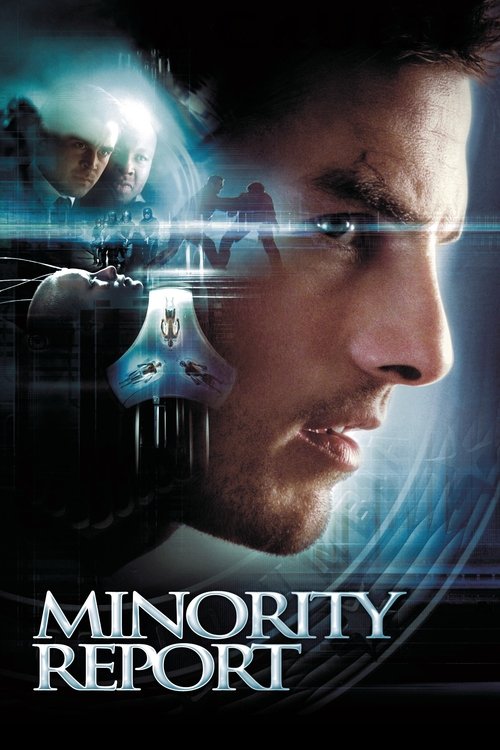
In 1987, he delivered an unforgettable performance as Lassefar in Danish director Bille August's "Pelle erövraren" (Pelle the Conqueror) . Portraying an elderly Swedish father emigrating to Denmark with his son for a better life, the film won the Oscar for Best Foreign Language Film and earned von Sydow a Best Actor Oscar nomination - a rare achievement for a performance in a non-English language film . Throughout the 1990s and 2000s, he continued working with esteemed directors: Woody Allen's "Hannah and Her Sisters" (1986), Penny Marshall's "Awakenings" (1990), Wim Wenders' "Until the End of the World" (1991), Lars von Trier's "Europa" (1991) - as the narrator, and Steven Spielberg's "Minority Report" (2002) - as Pre-Crime Director Lamar Burgess .Late Period Achievements and Legacy
In 2011, he received his second Oscar nomination, this time for Best Supporting Actor, for his role as the elderly tenant helping a boy who lost his father in the 9/11 attacks in Stephen Daldry's "Extremely Loud & Incredibly Close" . At 82, he became one of the oldest nominees in Oscar history . In 2015, he met new generations of audiences as Lor San Tekka in J.J. Abrams' "Star Wars: The Force Awakens" . The same year, he portrayed the Three-Eyed Raven in the 6th season of HBO's legendary series "Game of Thrones," earning an Emmy nomination . His final film was "Kursk" (2018), directed by Thomas Vinterberg, in which he played the admiral of the Russian submarine fleet. Director Vinterberg recounted that on his last day of filming, the entire crew gave him a standing ovation that continued outside the set . Over a career spanning more than 70 years, Max von Sydow appeared in over 150 films and numerous television productions, acting in multiple languages . In 2002, he became a French citizen and spent his final years with his wife, French documentarian Catherine Brelet, in Provence . He was made a Commander of the Order of Arts and Letters in 2005 and a Chevalier of the Legion of Honour in 2012 .🏆 Career Milestones
1949: First film experience with "Bara en mor" (Only a Mother). 1955: Met Ingmar Bergman and joined the Malmö City Theatre. 1957: Achieved international fame with "The Seventh Seal"; the knight playing chess with Death became cinema history. 1965: Hollywood debut as Jesus Christ in "The Greatest Story Ever Told." 1973: Made horror cinema history with "The Exorcist." 1975: Portrayed one of his most memorable villain roles in "Three Days of the Condor." 1987: First Oscar nomination (Best Actor) for "Pelle the Conqueror." 2002: Significant supporting role in Steven Spielberg's "Minority Report." 2011: Second Oscar nomination (Best Supporting Actor) for "Extremely Loud & Incredibly Close." 2015: Reached new audiences with "Star Wars: The Force Awakens" and "Game of Thrones"; Emmy nomination for Game of Thrones. 2020: Passed away on March 8 at his home in Provence, France, at the age of 90.🎭 Theater and Bergman Legacy
Throughout his film career, Max von Sydow never lost his commitment to theater. During Ingmar Bergman's tenure as director of the Malmö City Theatre, he took on significant roles including Brick in "Cat on a Hot Tin Roof," Peer in "Peer Gynt," Alceste in "The Misanthrope," and Faust in "Urfaust." This experience deeply influenced his approach to acting and added depth to his characters. An integral part of the ensemble created by Bergman in both theater and cinema, von Sydow worked alongside the most talented Scandinavian actors of the era, including Gunnar Björnstrand, Ingrid Thulin, Bibi Andersson, and Liv Ullmann .Trivia
Awards & Achievements20 awards
1989: Best Actor (Pelle the Conqueror)
2012: Best Supporting Actor (Extremely Loud & Incredibly Close)
1967: Best Actor - Drama (Hawaii)
1974: Best Supporting Actor - Motion Picture (The Exorcist)
1990: Best Supporting Actor - Miniseries or Film (Red King, White Knight)
2016: Best Guest Actor - Drama Series (Game of Thrones)
1987: Best Actor (Pelle the Conqueror) - WON
1988: Best Director (Katinka) - WON
1996: Best Actor (Hamsun) - WON
1982: Venice Film Festival - Best Actor (Flight of the Eagle)
1992: Tokyo International Film Festival - Best Actor (The Silent Touch)
2004: Cannes Film Festival - Festival Trophy
2006: San Sebastián International Film Festival - Donostia Award
2017: Los Angeles Film Critics Association - Lifetime Achievement Award
1954: Swedish Royal Foundation Cultural Award
1988: European Film Award - Best Actor (Pelle the Conqueror)
1988: Bodil Award - Best Actor (Pelle the Conqueror)
1997: Bodil Award - Best Actor (Hamsun)
2005: Commander of the Order of Arts and Letters - France
2012: Knight of the Legion of Honour - France