

movie
Avatar
“Enter the world of Pandora.”
7.6/ 1020092h 42mEnglish
ActionAdventureFantasyScience Fiction
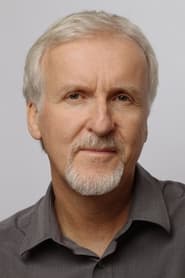
Directed by James Cameron
Movie Info
- Director
- Release Date
- Dec 16, 2009
- Runtime
- 2h 42m
- Language
- English
- Status
- Released
- Genre
- Action, Adventure, Fantasy, Science Fiction
Budget
$237M
Revenue
$2924M
Synopsis
In the 22nd century, when his twin brother is killed, former Marine Jake Sully takes his place on a mission to Pandora, a distant moon rich in a valuable mineral called "unobtanium." Using "Avatars"—bio-engineered bodies combining human and Na'vi DNA—he is tasked with infiltrating the Na'vi people, who refuse to leave their homeland, to persuade them to relocate for a human mining operation. But after being saved by Neytiri, a Na'vi warrior, and welcomed into her clan, Jake becomes captivated by their culture, their connection to nature, and the living world of Pandora itself. Torn between following orders and protecting the alien civilization he has come to love, Jake finds himself at the center of an epic battle that will decide the fate of an entire world.
Editor's Review
Do you remember that moment when James Cameron didn't just make a film, but created an experience? In 2009, Avatar transformed movie theaters into a magical forest, turning audiences into part of Pandora. What was the secret behind its magic? Was it the revolutionary 3D technology, or the inspiring story of Jake Sully's journey from a paraplegic Marine to a Na'vi warrior? Perhaps Cameron's film, which he dismissively called a 'snack' yet grossed billions, made us question how deeply we're connected to the place we call 'home.' With nine Oscar nominations and $2.7 billion at the box office, Avatar is not just a film—it's a landmark in cinema history. If you haven't seen it yet, get ready to get lost in Pandora's bioluminescent forests and feel the power of Eywa. And if you have, it might be time to return and say, 'I see you,' one more time.
Community Discussions
Cast & Crew

Michelle Rodriguez
Trudy Chacon

Giovanni Ribisi
Parker Selfridge

Sean Anthony Moran
Private Fike

Dileep Rao
Dr. Max Patel

Scott Lawrence
Venture Star Crew Chief

Sam Worthington
Jake Sully

Laz Alonso
Tsu'Tey

Matt Gerald
Corporal Lyle Wainfleet

Jason Whyte
Cryo Vault Med Tech

Zoe Saldaña
Neytiri

CCH Pounder
Mo'at

Sigourney Weaver
Dr. Grace Augustine

Wes Studi
Eytukan

Stephen Lang
Colonel Miles Quaritch

Joel David Moore
Norm Spellman
Reviews(0)
Sign in to write a review
Sign In