movie
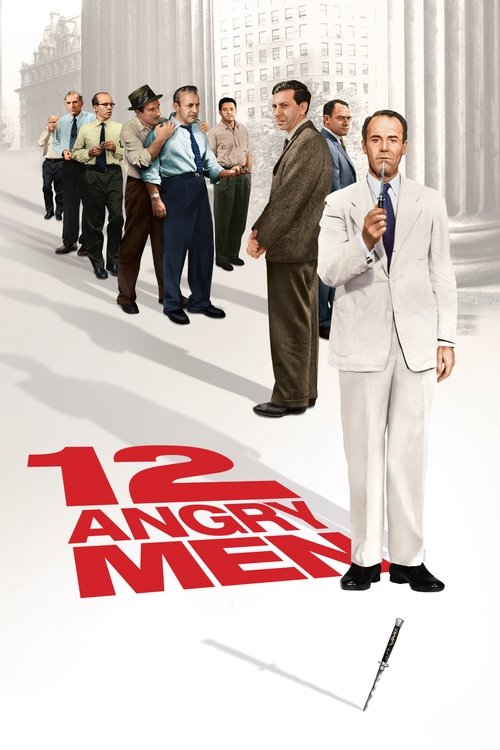
12 Angry Men
“Life is in their hands. Death is on their minds!”
8.6/ 1019571h 37mEnglish
Drama
Directed by Sidney Lumet
Movie Info
- Director
- Release Date
- Apr 10, 1957
- Runtime
- 1h 37m
- Language
- English
- Status
- Released
- Genre
- Drama

Budget
$0M
Revenue
$4M
Synopsis
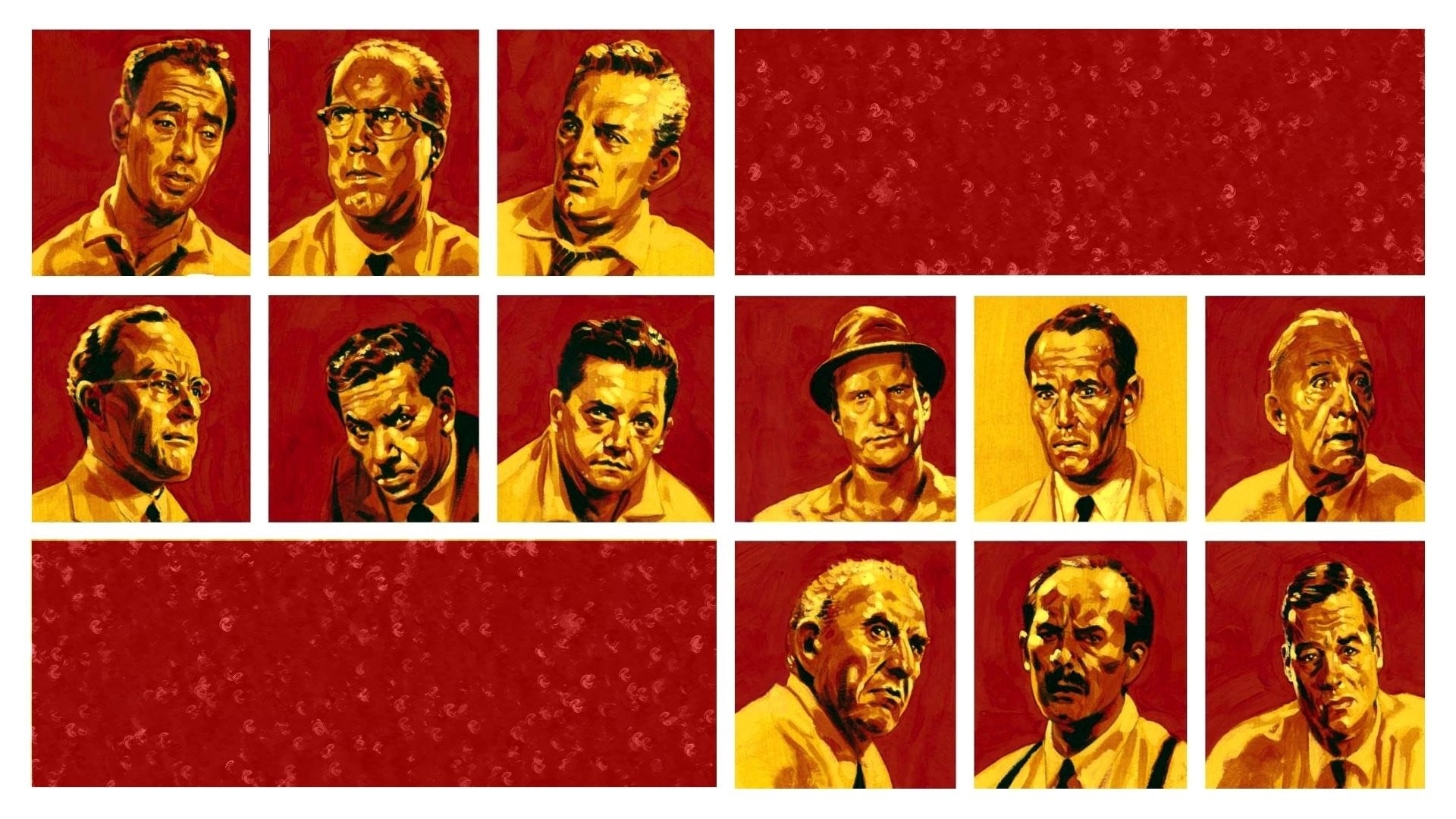
In the sweltering heat of a New York courthouse jury room, twelve men gather to decide the fate of a teenage boy accused of murdering his father. The case seems open-and-shut: there are witnesses, the murder weapon has been identified, and for most jurors, this is just a formality. The first vote is 11 to 1 in favor of "guilty." The sole holdout, Juror 8 (Henry Fonda), does not claim the boy is innocent, but urges his fellow jurors to examine the evidence more carefully before taking a young man's life . This simple plea ignites a heated debate that will last eleven hours, forcing each juror to confront their own prejudices, personal traumas, and moral compasses. As the room closes in and the tension escalates, the "guilty" votes begin to erode one by one. The final battle, however, lies with Juror 3 (Lee J. Cobb), who projects a grudge from his own troubled past with his son onto the young defendant .
Nereden İzlenir?
Kirala Google Play Movies
Satın AlGoogle Play Movies
Editor's Review
One room, twelve men, ninety-six minutes, and one of the most tense, brilliantly scripted confrontations in cinema history. Sidney Lumet's debut film, "12 Angry Men," traps a group of strangers within four walls for a relentless battle over a young man's fate . How can an open-and-shut case explode into an eleven-hour philosophical war, ignited by one man's simple plea to "talk about it"? The film doesn't just unravel a murder mystery; it embodies the conscience, rage, indifference, and fears of a nation in twelve distinct men. From Lee J. Cobb's venomous Juror 3 to Henry Fonda's unwavering moral compass, each performance is etched into acting history . As Boris Kaufman's camera slowly lowers, it collapses the room and the tension upon us . As Roger Ebert noted, this film is a universal exploration of the dark and light corners of the human soul, not just a legal drama . If you want to witness what cinema can achieve through dialogue and bear witness to a masterpiece, you must join these twelve angry men.
Community Discussions
Cast & Crew


Reviews(0)
Sign in to write a review
Sign In